
| Cocktail | |
|---|---|
| Type | Cocktail |
| Primary alcohol by volume | |
| Served | straight or on the rocks |
| Standard garnish | Lime |
| Standard drinkware | Cocktail glass |
| Commonly used ingredients |
|
| Preparation | Mix and serve. Garnish with a slice of lime |
'The Craft of the Cocktail' is often considered an industry bible—an absolute must-own for anyone who is interested in drinks. It’s written by Dale DeGroff, known in the industry as 'King of Cocktails,' who has trained a whole generation of the world’s best bartenders. Boston' name is known not only for its brands of distilled spirits, but also for its unique reference book, Mr. Boston Official Bartender's Guide, used by both professional and home bartenders as the 'Bible of Booze'. 'The Craft of the Cocktail' is often considered an industry bible—an absolute must-own for anyone who is interested in drinks. It’s written by Dale DeGroff, known in the industry as 'King of Cocktails,' who has trained a whole generation of the world’s best bartenders. Encyclopedic in scope and filled with clear, simple instructions, The Bartender's Bible includes information on: Stocking and equipping a bar'from liquors and mixers to condiments, garnishes, and equipment. Shot-by-shot recipes for over 1,000 cocktails and mixed drinks from bourbon to.
The gimlet (pronounced with a hard 'g') is a cocktail made of gin and limejuice. A 1928 description of the drink was: gin, and a spot of lime.[1] The description in the 1953 Raymond Chandler novel The Long Goodbye stated that 'a real gimlet is half gin and half Rose's lime juice cordial and nothing else.'[2] This is in line with the proportions suggested by The Savoy Cocktail Book (1930), which specifies one half Plymouth Gin and one half Rose's Lime Juice Cordial.[3] However, modern tastes are less sweet, and generally provide for at least two parts gin to one part of the lime and other non-alcoholic elements (see recipes below).
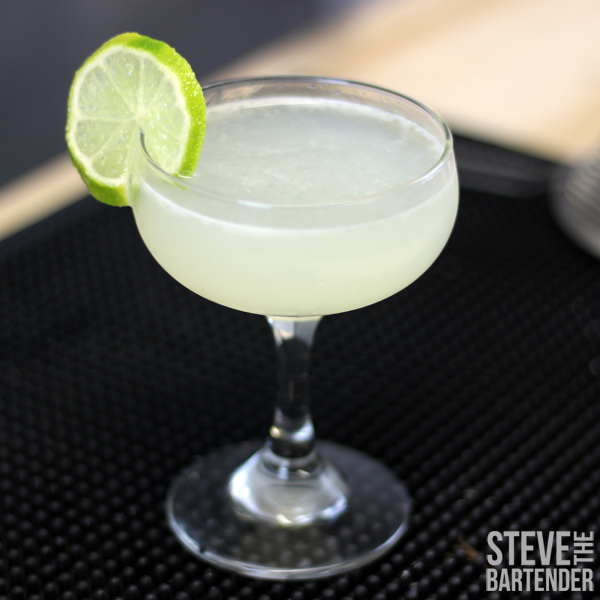
The derivation of the name of the cocktail is contested. It may be named after the tool for drilling small holes (alluding to its 'piercing' effect on the drinker) or after Surgeon Admiral Sir Thomas Gimlette KCB (1857–1943), who is said to have first added lime cordial to the daily gin tot of the men of the Royal Navy to help combat the ravages of scurvy on long voyages.[4][5]
Variations[edit]
A variant of the cocktail, the vodka gimlet, replaces gin with vodka. The Daiquiri is a similar lime juice cocktail that uses light rum instead of vodka or gin. The 'Pimmlet' substitutes 2 parts Pimm's No.1 Cup to 1 part London Dry Gin.
Preparation[edit]
David A. Embury gave a gimlet recipe (called a Gin Sour) in The Fine Art of Mixing Drinks (3rd Ed., 1958), calling for an 8:2:1 gin/lime (or lemon) juice/simple syrup ratio plus garnish. Eric Felten essentially repeated this in his 'How's Your Drink' column in The Wall Street Journal Weekend Edition of August 4, 2006:
- 60 ml (2 US fl oz) gin or vodka
- 15 ml (1⁄2 US fl oz) lime juice
- 7 to 15 ml (1⁄4 to 1⁄2 US fl oz) simple syrup
- Garnish with a lime
William L. Hamilton gave this recipe in his 'Shaken and Stirred' column in The New York Times on September 15, 2002: A gimlet served at the Fifty Seven Fifty Seven Bar at the Four Seasons Hotel consists of the following, shaken with ice:
- 120 ml (4 US fl oz) vodka
- 15 ml (1⁄2 US fl oz) fresh lime juice
- 15 ml (1⁄2 US fl oz) Rose's lime juice
- lime wedge for garnish
The Bartender's Bible by Gary Regan lists the recipe as:
- 60 ml (2 US fl oz) Plymouth Gin
- 15 ml (1⁄2 US fl oz) Rose's lime juice
- Garnish with lime wedge
Regan also states 'since the Rose's product has such a long and impressive history (which predates the gimlet), I am inclined to think that Rose's was the ingredient that invented the drink.'
The New New York Bartender's Guide by Sally Ann Berk lists the ratio of gin to Rose's lime juice as 3:1.
The recipe on Rose's Sweetened Lime Juice label:
- 30 ml (1 US fl oz) Rose's Lime Juice
- 45 ml (1.5 US fl oz) vodka, rum, or gin
- Shake with ice and serve
Charles H. Baker quoted a recipe in The Gentleman's Companion - an Exotic Drinking Book (1939) of:
- 45 mL (1 jigger) dry gin
- 5 mL (1 tsp) simple syrup
- 2.5 mL (1⁄2 tsp) Lime Cordial
Take a big saucer champagne glass, put in 45 mL (1 jigger) either of dry or old Tom gin, 5 mL (1 tsp) gomme syrup or sugar, 2.5 mL (1⁄2 The shadows shazam. tsp) – to taste – of lime syrup or lime cordial.
Fill up with chilled plain water, add 1 ice cube and thin slice of big green lime. Don't use soda water, please.
He is also quoted from the book as saying:
- 'Why on earth this stroke of genius stands unheralded and unsung in this fair and allegedly free land of ours shall, to us, always be a mystery like who it is that designs expensive radio cabinets, why all cinema stars long to ruin themselves playing highbrow roles, and why good prize fighters want to write fiction. Throughout the whole swing of the Far East, starting with Bombay-down the Malabar Coast to Colombo; to Penang, Singapore, Hong Kong and Shanghai, the Gimlet is just as well known as our Martini here.
- And from Bombay-down the Malabar Coast to Colombo; to Penang, Singapore, Hong Kong and Shanghai, gin was a form of a healing tonic for malaria! Limes healed scurvy creating the perfect medicinal cocktail.:
- The main thing in its flavour is that, unlike most cocktails, it is not 'warming' in hot weather, and in fact is a good cooler. It is simple, without fancy fizzings, and is one to experiment with until the precise amount of lime cordial is found, to taste. . . . This last is a British invention based on a similar essence to Rose's Lime Juice-which comes in the slender decorative bottle we see back of most good soda fountains-but is not quite so pungent. Soda fountain lime syrup also would do in a pinch. We have approximated it with fine results by diluting it with equal amounts of water.'
The following vodka gimlet recipe is from the novels of Stuart Woods:
Pour six ounces [180 mL] of vodka from a 750 mL bottle; replace with six ounces [180 mL] Rose's Sweetened Lime Juice (available from nearly any grocery), add a small amount of water for ice crystals, shake twice and store in the freezer overnight. Pour into a martini glass and serve straight up. The glass will immediately frost over. With this recipe, no cocktail shaker is required and the cocktail is not watered down by melting ice. You may use even the cheapest vodka, and no one will ever know.
A variation that adds mint is commonly known as a South Side.
The Carnaby Gimlet, a variation with natural spring water, was created at the Carnaby Club, Rimini, Italy.[6] The recipe is:
- 30 ml (1 US fl oz) gin (suggested with Tanqueray or Bombay Sapphire)
- 7 ml (1⁄4 US fl oz) fresh lime juice
- 15 ml (1⁄2 US fl oz) Sweet Lime Syrup
- top with cold still water
- Serve with ice and lime slice in old fashioned double shot tumbler
Etymology[edit]
The word 'gimlet' used in this sense is first attested in 1928. The most obvious derivation is from the tool for drilling small holes, a word also used figuratively to describe something as sharp or piercing. Thus, the cocktail may have been named for its 'penetrating' effects on the drinker.[7]
Another theory is that the drink was named after British Royal Navy Surgeon Rear-Admiral Sir Thomas Gimlette KCB (1857-1943), who allegedly introduced this drink as a means of inducing his messmates to take lime juice as an anti-scurvy medication.[8] However, neither his obituary notice in the BMJ,[9]The Times (6 October 1943) nor his entry in Who Was Who 1941–1950 mention this association.
See also[edit]
References[edit]
- ^D. B. Wesson, I'll Never Be Cured III
- ^Terry Lennox in Raymond Chandler's The Long Goodbye
- ^Craddock, Harry (1930). The Savoy Cocktail Book. Retrieved 20 December 2016.
- ^'gimlet'. Online Etymology Dictionary.
- ^Covey Crump, a 1955 dictionary of Royal Navy slang by Commander A. Covey-Crump, RN, a former Naval Assistant to the Chief of Naval Information.Archived December 1, 2009, at the Wayback Machine
- ^'Carnaby Club Rimini'.
- ^'gimlet'. Online Etymology Dictionary.
- ^Covey Crump, a 1955 dictionary of Royal Navy slang by Commander A. Covey-Crump, RN, a former Naval Assistant to the Chief of Naval Information. Archived December 1, 2009, at the Wayback Machine
- ^'Deaths In The Services: Sir Thomas Gimlette KCB (1857-1943)'. British Medical Journal. 2 (4320): 530. 23 October 1943. doi:10.1136/bmj.2.4320.530. PMC2285216.
Mr. Boston, previously Old Mr. Boston, was a distillery located at 1010 Massachusetts Avenue in Boston, Massachusetts, from 1933 to 1986. It produced its own label of gin, bourbon, rum, and brandies, as well as a few cordials and liqueurs.
History[edit]
The distillery was founded in the Roxbury, Massachusetts, neighborhood of Boston in 1933 by Irwin 'Red' Benjamin and Hyman C. Berkowitz. Old Mister Boston was known for its collectible bottles such as the 1953 Presidential Inaugural Bottle.
Over time, through a series of changes of ownership, the words 'Old' and 'Mr.' were dropped from the name until it was known simply as 'Boston'.[1] The distillery was a major employer in the Boston area from the 1930s until its closing circa 1986 when the parent company, Glenmore Distillers, shut down operations and the brand was withdrawn from the market. The building that housed Old Mr. Boston's operations is owned by the City of Boston and is in use as a City Inspectional Services headquarters as well as housing other city agencies such as the Boston Public Health Commission and the Department of Transitional Assistance.[citation needed]
Famous 'Bartender's Guide'[edit]
The 'Mr. Boston' name is known not only for its brands of distilled spirits, but also for its unique reference book, Mr. Boston Official Bartender's Guide, used by both professional and home bartenders as the 'Bible of Booze'. The Guide was first published 1935, according to the first date published in the Guide's publisher information page, the early days after the Repeal of Prohibition, when the distillery started up business again. As late as 2012 new editions were printed.[1][2] In July 2016, Mr. Boston launched its new website, mrbostondrinks.com, where all of the Official Bartender's Guides are available in digital form.[citation needed] It contains over 10,500 cocktail recipes.
1995 acquisition[edit]
The Barton Brands liquor unit of New York's Canandaigua Wine Co. (now Constellation Brands) acquired the brand name in 1995 and resumed production. Barton uses the brand for a line of liqueurs and cordials.[1] In 2009 Constellation Spirits, including the Mr. Boston brand, was sold to the Sazerac Company of New Orleans,[3] who have subsequently released light and dark rums imported from the U.S. Virgin Islands under the Mr. Boston name.
2009 acquisition[edit]
The Sazerac Company bought the Mr. Boston brand in 2009 and began putting many of the editions of the Bartender's Guide as the company could find on a website, which was at last count 58 out of the 75 guides published.[citation needed]
Mark Brown, president and chief executive officer, the Sazerac Company, said 'The Mr. Boston books have covered the evolution of the cocktail in America since Prohibition, but sadly, they were let go over the years. The ties between our company and that brand are inextricably linked, with not only the Sazerac Cocktail, but our heritage in New Orleans, a city long synonymous with the cocktail culture. It was a natural fit to bring it all together where we are ensuring the future of the brand for at least another 80 years as the 'go to' site for professional and amateur mixologists.'
Famous Mr. Boston Brands[edit]
- Mint & Gin
- 100 proof Vodka
References[edit]
- ^ abcJoshua Glenn (December 28, 2003). 'Looking for Mr. Boston'. Boston Globe. Retrieved 2007-11-13.CS1 maint: discouraged parameter (link)
- ^Anthony Giglio, Ben Fink: Mr. Boston Official Bartender's Guide. John Wiley and Sons 2009, ISBN978-0-470-39065-8, p. 89 (online copy, p. 80, at Google Books)
- ^Keith Lawrence (May 1, 2009). 'Sazerac expanding bottling plant'. Messenger-Enquirer, Owensboro, Kentucky. Retrieved 2010-05-21.CS1 maint: discouraged parameter (link)
The Bartender's Bible
External links[edit]
Cocktails The Bartenders Bible